The first article in this series highlighted two key historical events that were crucial to the formation of the modern political identity of the Shia of Jabal Amil. The Safavid Empire's adoption of Twelver Shi'ism as its official religion of the empire connected the Shia minority in Jabal Amil to a wider population. It gave them Islamic and transnational depth, a connection that would prove highly significant in modern times. The other event was the campaign of Ahmad Pasha al-Jazzar, who aimed to eliminate local autonomous ambitions in the region, including Jabal Amil's, resulting in the region’s destruction, the loss of its autonomy, and a shift of the Shi'ite intellectual center from it. Building on this legacy, this article examines how the Amilis navigated the Ottoman collapse, from aligning with the Arab Kingdom in Damascus to being forced into Greater Lebanon.
Jabal Amil in the Late Ottoman Era: Shia Notables and Early Arabism
During the late Ottoman Empire, Amili's relations with the empire's center were peaceful yet cautious. They maintained a pragmatic attitude toward the state, fearing that its collapse might lead to either European colonization or domination by the established Mount Lebanon Mutasarrifate. Kamel Beik Al Assaad, the feudal leader from Jabal Amil from the El Assaad clan, participated in the election of 1911 and won a seat representing Vilayet Beirut mobilizing the support of the Amilis. However, Shia remained marginalized under the Ottoman Empire and lacked the official recognition of their religion or the right to establish confessional courts.
Meanwhile, an emerging class of notables and intellectuals challenged traditional feudal hegemony. A new intellectual movement emerged through influential periodicals like Al-Irfan, and by establishing links with the early Arabism movement. The rising intelligentsia was seeking to integrate Shia identity into the broader Arabic body, prioritizing the Arab-Muslim identity over narrow sectarianism. However, during the First World War, the Ottoman Empire cracked down on this movement, executing activists and shutting down periodicals including Al-Irfan.
The Battle of Identities: The Arab Kingdom vs. French Partition
After World War I and the Ottoman collapse, the Shia of Jabal Amil sought to redefine their political status. Most of the population and leadership embraced Pan-Arab nationalism, aligning with the Arab kingdom of King Faisal in Damascus. The imposition of the French mandate over Lebanon and Syria, as established in the Sykes-Picot agreement, reignited fears of isolation. This situation put Jabal Amil in conflict with the group advocating for an independent state under French protection, primarily led by the Christians of Mount Lebanon, who had previously been governed under the European protection of the Mount Lebanon Mutasarrifate.
The French mandate ignited an armed resistance.The situation forced the Amili leadership to make a crucial strategic decision: join a French-sponsored Lebanese state or align with an independent Arab Kingdom headquartered in Damascus.
Jabal Amil's notables convened at the famous Wadi al-Hujeir conference in April 1920 organized by Abd el-Hussein Sharafeddine. They asserted loyalty to King Faisal and declared opposition to French occupation, calling for national unity between Muslims and Christians. King Faisal appointed Kamel al-Assaad as the governor-general (mutasarrıf) of Jabal Amil, integrating the regional Shiite elite into the Syrian Arab administration.
France Crushes Jabal Amil: Niéger’s 1920 Campaign:
The outcomes of the Wadi al-Hujeir conference were not favorable to the French, who responded decisively with a military campaign led by Colonel Niéger to suppress the opposition and establish French control over Jabal Amil. The campaign was brutal, and given the Amili's inability to resist the invasion, it resulted in crushing the opposition, urban destruction, and exile of key leaders, leaving the community of Jabal Amil fractured and leaderless.
Amili's reaction to the campaign, once again, split into two main directions: resistance and pragmatic submission. Rebel groups continued launching attacks at the French troops, attempting to assassinate General Gouraud, commander of French forces in Lebanon and Syria. Meanwhile, intellectuals in exile were lobbying against the occupation and maintaining support and connection with the Arab unionists. On the other side, a class of intellectuals supported joining Greater Lebanon to avoid further repression, under French promises of security and inclusion for the community within the new state.
How Jabal Amil Became South Lebanon: Joining Greater Lebanon
The Arab Kingdom suffered a defeat against French troops at the Battle of Maysalun shortly after Niéger’s campaign, ending the dream of Arab unity. This forced the Amili religious and political leadership to make a decisive, pragmatic shift and recognize the French mandate and the new borders of Greater Lebanon. This structural realignment was formally anchored in 1926 when the French Mandate administration recognized Twelver Shi'ism as an official legal sect and established the Ja'fari jurisprudence court system.
This institutional integration paved the way for traditional landowning elites to re-consolidate their position as intermediaries between the mandatory authorities in Beirut and the rural population of the Jabal Amil, which became known as South Lebanon, by securing seats in the newly minted Lebanese Parliament.
As historian Max Weiss observes, this institutionalization presented a profound paradox: while it granted the Shia long-denied state recognition and judicial autonomy over personal status law, it simultaneously bound the community to the emerging sectarian model, codifying their identity as a distinct minority within a Christian-dominated state.
The 1923 Lebanon-Palestine Border
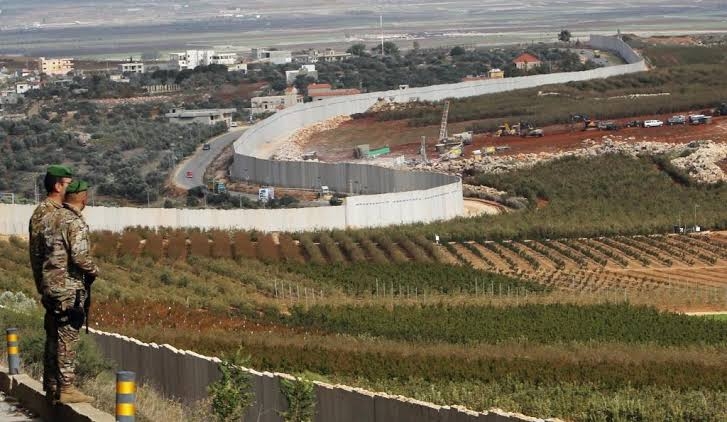
Beyond the systematic destruction and subjugation of Jabal Amil by French colonial authority, the formalization of the borders between the French and British territories under the 1923 Paulet-Newcombe Agreement transformed Jabal Amil entirely, severing its geographic connections and rendering it an isolated periphery. For generations, Amil inhabitants relied on organic access to northern Palestine towns and markets for trade and work. The imposed borders choked these vital arteries, cutting off the region from its primary economic lifeline. As a result, Jabal Amil’s economy once again collapsed into agrarian subsistence, impoverishing the Amili population and entrenching a sense of geographic and socio-political marginalization within the newly formed Lebanese state.
From Autonomy to the Margins
The collapse of the Ottoman Empire gave Jabal Amil's Shia a chance to end centuries of isolation and institutional neglect. Fueled by the collective trauma of Ahmad Pasha al-Jazzar's campaign, which deteriorated the region's socio-economic status and plunged it into poverty, Amilis saw in the Arab revolt a strategic opportunity to break their isolation and ground their political agency within a broader Muslim-Arab depth. However, the French and British imperial ambitions crushed this Pan-Arab horizon. Crushing the Arab and Syrian revolts ended the Amilis' ambitions of unity. At the same time, the imposition of colonial borders with Palestine and Syria cut it from its historical and national connections, forcibly reorienting the region toward the newly established Maronite-dominated state.
In less than two centuries, Jabal Amil underwent dramatic structural decline: transforming from a prosperous region with relative autonomy in the 18th century to a pivotal geopolitical front during the Arab revolt, and ultimately into an impoverished periphery within the newly established Lebanese state, isolated from its natural sphere. This forced integration and generational trauma laid the foundation for the Amil's modern socio-political grievances.