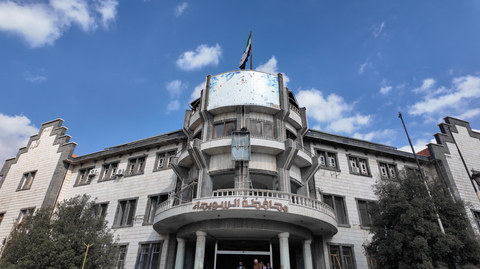
In mid-July 2025, Sweida province in southern Syria became the target of a fierce campaign of sectarian incitement and violence. What began as a cycle of kidnappings, retaliation, and unsuccessful negotiations led to a violent escalation. Pro-government forces—including the official General Security, allied militias, and Bedouin forces—encircled the city, attacked surrounding villages, and attempted to seize its center. Druze armed groups, responsible for protecting the city throughout the Syrian war, confronted the attackers. Over a thousand people were killed, mass displacement followed, and Sweida remained under siege at the time of writing.
The attack on Sweida was not the first of its kind since the fall of the Assad regime. In March 2025, an ambush led by armed men apparently linked to the former regime against General Security forces triggered a brutal response from government forces that spiraled into sectarian massacres targeting Alawite civilians in Syria’s coastal region.
Several other incidents since then have revealed a pattern of using violence to impose authority. Yet different communities have responded in different ways, depending on their power and ability to resist, such as Sweida and Jaramana.
A Story of Survival Under a Fractured State
Marwan N. is a Syrian man from Swieda, living in Beirut. In July 2025, during the first days of the attacks on his hometown, he received a phone call from a gang in the city of Dara’a. The gang, some of whose members were tied to the state’s General Security, demanded ransom for his father, who was recently abducted while tending his garden in their village of Sami’, west of Sweida city.
Marwan says he negotiated a deal with the kidnappers, arranging for relatives to meet them near Jaramana in the suburbs of Damascus for the exchange. At the time, Marwan was in contact with Druze officers in Jaramana’s General Security who set an ambush for the gang, rescued his father, and captured three gang members.
Marwan and his family hoped for justice, but Jaramana’s General Security branch in Jaramana couldn’t keep the abductors in custody, given the paralysis of the judiciary after the regime's collapse. The abductors were handed over to State Security for investigation and then released. The case was dismissed as a “misunderstanding between different state security apparatuses,” which served as a perfect cover for the General Security's favoritism towards the politically aligned gang.
This incident captures the complexity of Syria’s post-Assad security landscape, especially in cities like Sweida in southern Syria and Jaramana in the Damascus suburbs. Both are majority-Druze, yet their political scene was shaped by a complex series of events and different trajectories requiring in-depth historical and political analysis. Sweida’s crisis cannot be reduced to sectarian differences. It extends to deeply rooted structural issues of negotiated autonomy, weak state authority, and unresolved questions of post-conflict governance.
The Druze of Jaramana and Sweida are connected through strong religious and familial ties. Still, their demographic and geographic differences placed them in different positions during the 14-year conflict and in the aftermath of Assad’s fall.
These factors shaped both their relationship with the emerging government and the government’s strategy toward them. In Jaramana, government violence led to a security deal with local authorities; in Sweida, it fueled demands for greater local autonomy.
Sweida During the Syrian War: A Fragile Exception
In the early years of the Syrian revolution, Sweida didn’t witness large demonstrations like many other Syrian cities and provinces. The Druze community there is conservative, mainly, and follows a strict social structure where the spiritual leadership wields political influence. Despite the emergence of a robust civil society after 2011, the absence of genuine political life in Syria stifled the ability of these movements from developing into a representative structure that could serve as an alternative to the traditional religious authority. Meanwhile, the Assad regime avoided violent confrontations in the area in the early stages of the revolution, seeking instead to maintain a local balance of control with the Druze community while using fears of extremism and threats of violence against minorities.
At first, the Assad regime reduced its presence in Sweida after striking deals with Druze leaders. The goal was to neutralize the province and avoid involvement in the armed opposition. Meanwhile, the spiritual leadership sought to avoid complete submission to Damascus and protect its men from compulsory military conscription. As a result, Sweida hinged between loyalty and rebellion, occupying a gray zone of negotiated neutrality as a form of tolerated local power.
This situation led to the emergence of local armed groups for self-defense backed by the Druze community and spiritual leaders. Most of these groups coordinated their operations with the regime, focusing mainly on defending the city from threats, especially from the Islamic State (ISIS) in the east.
The early phase of the war thus established a pattern of tolerated autonomy. Sweida was allowed limited freedom, autonomy, and self-defense as long as it didn't openly rebel against the regime.
The Turning Point: The Islamic State’s Attack of 2018
The trajectory of events took a violent shift in July 2018, when ISIS launched attacks on Sweida, killing hundreds of civilians. Locals blamed the regime and accused it of facilitating the assault to gain legitimacy and control over the city. Locals reported that the regime had disarmed Sweida’s security groups just days before the attack.
This assault strengthened opposition armed groups such as the “Men of Dignity”, who were involved in a series of clashes between Druze forces and regime groups in the city, mainly the military intelligence division. In July 2022, the “Men of Dignity” were successful in taking over the intelligence division headquarters in Sweida following a series of abductions by the division targeting locals.
Fueled by deepening suspicion toward the state, Sweida's relationship with Damascus shifted. It was no longer of a passive and neutral nature, but rather an active assertion of autonomy.
From Protests to Armed Confrontation (2019–2024)
Dissatisfaction developed in the following years into demonstrations that swept the streets of Sweida over the economic collapse and consequent inflation. What began as protests over livelihood evolved into political demands that included Assad’s ouster. The spiritual leadership sought to strike a balance between avoiding direct confrontation and supporting the protests.
Protests continued until the regime fell in December 2024, when the armed groups of Sweida joined an operation against it. They were the first to march toward Damascus along with other groups from Dara’a under the “Southern Operations Room (SOR)”. Druze forces later withdrew to Sweida when Hay'at Tahrir al-Sham (HTS) forces took over the capital.
Sweida’s exceptionality was less about neutrality and more about a negotiated bargain: tolerated autonomy under constantly negotiated forms of self-defense. When this bargain collapsed with the regime’s fall, Sweida’s armed groups revealed their capacity to play a crucial role on the national stage, positioning themselves as alternatives to the fallen regime locally and gaining new bargaining power essential for the post-Assad era.
The Events of Jaramana and Ashrafiyat Sahnaya
Jaramana and Ashrafiyat Sahnaya are two Druze-majority areas located in the southern suburbs of Damascus. Due to their strategic location and demographic characteristics, both areas remained under Assad’s control throughout the Syrian war. The cities, which were heavily shelled by rebels and crowded with displaced Syrians, were considered frontlines for regime operations and were tightly controlled by pro-regime militias and intelligence.
On December 7, a day before the fall of the Assad regime, Jaramana witnessed a protest that led to the destruction of Hafez al-Assad’s statue in the city center. Police forces disappeared, and spiritual leadership took charge of the city. A joint operations room was formed, based in Sweida, with the “Men of Dignity” as its leading force.
In the months after Assad’s fall, Jaramana was run by its local spiritual, civil, and military institutions until violence erupted in the city late April 2025 after a fabricated audio recording insulting Prophet Mohammad was leaked, allegedly made by a Druze community figure. Clashes erupted, prompting the interference of state forces, along with Israeli airstrikes carried out under the pretext of defending Syrian minorities.
A week later, a ceasefire was declared between the state and local authorities: state security was allowed inside the city. At the same time, heavy weaponry was handed over to authorities, and regional armed groups joined the general security.
Unlike Sweiayda, Jaramana’s proximity to Damascus and demographic vulnerability made cooperation with the central authority a survival strategy.
The Druze Position: Between Regime Loyalty and Local Autonomy
The differences between Jaramana and Sweida were crucial in shaping the relationship with both the fallen regime and the new one. government. Each city’s specific circumstance impacts its political discourse and capacity.
In Jaramana, the spiritual leadership chose to maintain good relations with the old regime and, after its fall, pursued good terms with the new government despite the violent incidents by allowing the new General Security inside the city and either handing their weapons over to the state or joining its security apparatus.
In Sweida, power dynamics were different. Sweida’s size, demographic weight, and geographic distance from Damascus allowed its leaders to adopt a more confrontational stance toward both the old regime and the emerging government. The spiritual authority of Sheikh Hikmat al-Hijri, backed by local armed groups, adopted a strategy and rhetoric of autonomy.
While Jaramana’s leadership favored integration within the de facto authorities in Damascus to protect its vulnerable position, Sweida’s leaders were in a position to demand concrete guarantees of decentralization and political participation.
The New Government’s Strategy
The new Syrian government’s approach to Sweida sounds different in its language but resembles the Assad era in its methods. Its priority is to restore the state’s monopoly of weapons by disarming all non-state groups, or integrating them into the new Syrian national army. . On paper, this appears to be a necessary strategy for rebuilding the state. In practice, it lumps together very different actors: foreign jihadists, Kurdish units, and local Druze militias whose weapons are for protection and self-defense, rather than power struggles. By categorizing them all together, the government tends to view Sweida’s self-defense groups less as communities with legitimate security concerns and more as obstacles to central authority.
Additionally, the promise of “weapons for participation” is hollow. The government speaks of partnership, yet the political framework it introduced this spring gives Sweida little real say in Damascus. Handing over arms, then, would mean leaving themselves exposed to attacks with no state to protect them. This is exactly the kind of vulnerability that Assad’s system created and exploited: the choice between submission or being exposed and abandoned.
Sectarianism is central to this strategy. The new government views Druze, Kurds, Alawites, and Sunnis as separate blocs to be managed, balanced, or pressured, rather than citizens with equal rights. For Sweida, this means that its Druze militias are framed as a problem to be neutralized, not as partners in shaping Syria’s future. Although the tools are less violent than the sieges and bombardment of the Assad era, disarmament campaigns and delegitimization have the same rationale and goal, which is the use of pressure and threat of violence to keep local communities in line, while offering little real space for self-government, cooperation, or trust in the state.
It can be argued that the deal between Jaramana’s spiritual authorities and the state discourages Sweida from pursuing a similar path. Local security forces in Jaramana were granted strict authority within their city. And while they officially fall under the Interior Ministry, they have no say in national governance and politics, and are treated as inferior divisions of the General Security apparatus.
The similarities between the methods of the Assad regime and those of the new government highlight a structural flaw within Syrian politics: central authority is often enforced by violence, and limited political participation is granted in exchange for loyalty. Equal citizenship and restored trust in state institutions, the cornerstones of democratic governance, remain unaddressed by this approach.
According to political economy researcher Socrat Al-Alo’s analysis, this approach turns violence into a political tool. Violence is used to redistribute power, enforce submission, and legitimize government authority by delegitimizing others. The state frames itself as the protector of some communities while portraying others as traitors or threats to national unity.
The government’s strategy was reinforced by Israel’s intervention under the pretext of protecting minorities in southern Syria. Israel used these claims to justify bombing governmental targets in Damascus, and as leverage in its ongoing negotiations with the Syrian government.
The government reproduces a cycle of coercion, trapping minorities between surrendering arms and risking annihilation, or keeping them and facing repression. The outcome is a Syria where political violence continues to reign, and trust between the state and its citizens remains fragile.
A Fragile Future
For Marwan, whose father was released only to see his abductors walk free, the lesson was bitter but familiar: Politics still controls justice. His story is not an isolated case, but a reflection of the larger dilemma facing communities like those in Sweida, Jaramana, and the Syrian coast: how to bargain with power rather than participate as equal citizens.
The fall of Assad raised hopes that this cycle might finally come to an end. But the new government’s reliance on the same strategies of sectarian management and selective partnerships suggests otherwise. Sweida insists on autonomy, Jaramana on survival, but both are still navigating a system where loyalty is traded for protection, and opposition risks retaliation.
Until Syria can move beyond this logic, the phone call Marwan received in July 2025 will remain a metaphor for the country itself: a people caught between armed groups, fractured authorities, and a state more concerned with control than justice.