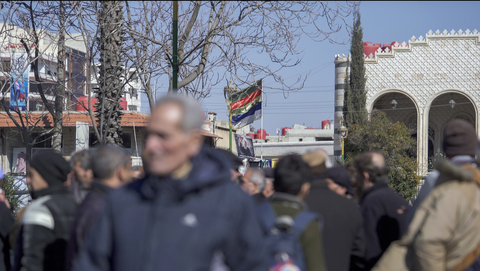
Salam Kabboul, Sweida – January 2025.
The recent clashes in Sweida, which started on the 13th of July, have claimed the lives of 1,265 deaths to date. The Sweida massacre followed the massacres on the coast, where around 1,500 were killed. Most reports claim that the latter victims were mostly from the Alawite community, and that the massacres occurred in coordinated operations by the de facto government-aligned factions back on March 7–9 of this year. Sweida also came after the escalation of violence by armed Sunni Islamist groups and government-affiliated security forces targeting Druze-majority towns such as Jaramana and Sahnaya in May, and the bombing of the St. Elie Church in Damascus. The recent violence in Sweida, along with ongoing sectarian and revenge killings in various parts of the country, doesn’t appear to be a series of isolated incidents, but rather reflects the wave of instability and insecurity the country is sinking into.
Approximately 340,000 of Syria’s 750,000 Druze live in Sweida. In addition to the rural areas of Damascus, particularly Jaramana and Sahnaya, which have a population of around 250,000, Druze communities are also located in northern Syria, particularly in Idlib, with a population of around 43,000. The provinces of Deraa and Sweida form Southern Syria. Before 2011, Deraa had a population of approximately one million, predominantly Sunni, with small Druze and Christian communities. The city is located in fertile plains bordering the Golan Heights and Jordan. Sweida province is overwhelmingly Druze, with approximately 90% of its 375,000 inhabitants belonging to this group. Compared to Southern Lebanon, the Golan Heights and Southern Syria were a relatively quiet border, without active military conflict, and governed by a functioning UN de-escalation mechanism (UNDOF). Since the weakening of the Syrian government forces after 2011 and the resulting power vacuum in Southern Syria, Israel has tried to intervene by supporting selective groups against Iranian-backed forces. Among them were also Druze groups.
Beyond the internal dynamics of the Druze in Southern Syria, the community holds broader regional significance. The Druze, an ethno-religious group, practice a syncretic faith rooted in Islam.
1) The Syrian South after 2011 - the Regional Situation
Historically, many Druze were often considered attached to the Syrian state, maintaining tight communal bonds and a tradition of self-defense. Due to the occupation and annexation of the Golan, some Druze groups keep limited ties to the Druze communities in the Galilee (Israel), particularly the Golan Heights.
From 2011 until today, Israel maintained a calibrated and covert engagement policy in Southern Syria, exploiting internal conflicts to advance its interests and strategic agenda of expanding its control to new areas in Syria, and establishing itself as a new player in the Syrian arena. This included aid, medical treatment in Israeli hospitals, and the provision of food, fuel, and infrastructure support to selected rebel-held communities near the Golan Heights.
The Druze played a sensitive and complex role in this context. Israeli support, though limited aimed primarily to prevent Iranian and Hezbollah-affiliated forces from approaching the Israeli border. This included security arrangements entailing the Syrian regime’s control over the whole of the Syria-Israel border in exchange for Iranian forces and Hezbollah leaving the area, reducing spillover and the risk of attacks from Southern Syria on Israel.
2) The national dimension of “the Druze.”
The province of Sweida, especially in Sweida city, generally maintained a neutral position toward the Assad regime until around 2020. The different Druze factions and groups did not fully align with the opposition, carving out a neutral space for Sweida in the war and protecting it from extremist and regime attacks. At the same time, they worked to prevent the conscription of Druze youth into the Syrian (state) army. Their relationships with the broader non-Druze population of Southern Syria, particularly in neighboring regions such as Daraa (predominantly Sunni Arab) and, to a lesser extent, Quneitra (with a more mixed population), have been shaped by a complex mix of historical coexistence, local alliances, political dynamics, and, at times, tensions. Due to the absence of an effective central authority in South Syria—whether from the Damascus government, regional authorities, or opposition forces—numerous armed groups and criminal gangs emerged during the thirteen years of conflict. These groups often shift allegiances and pursue competing interests. Complex alliances were formed, and pragmatic objectives were pursued. Druze militias defended their communities against attacks from Sunni Muslim extremist groups, who often viewed the Druze as “heretics”, while at the same time being largely ignored by pro-Assad forces.
Some extremist Islamic ideologies perceive the Druze as deviants from Islam. ISIS persecuted Druze in areas under its control, including executions and forced conversions. Jabhat al-Nusra (now Hayat Tahrir al-Sham, HTS) in Idlib province also espoused hostile views toward the Druze, particularly in its early years. This culminated in incidents of Qalb Lawzah in 2015, killing at least 20 Druze villagers.
Later, HTS—under pressure from foreign backers such as Qatar and Turkey—moderated its stance to some extent and pledged to respect minority rights. Nonetheless, a lingering mutual distrust remains, not only among hardline Islamist factions within the new governing structures, but also among the Druze beyond the followers of specific groups.
3) Assad Regime - the self-proclaimed Guardian of the “religious minorities”
Since coming to power—and especially over the past two decades—the Assad regime has deliberately and consistently promoted its regime as a “guardian of religious minorities” narrative as part of its domestic and international strategy to retain power. This narrative portrays the regime as the protector of religious minorities, including Alawites, Christians, Druze, Ismailis, Armenians, etc., against an alleged existential threat posed by Sunni Islamist extremism. However, these minorities have endured years of oppression and marginalization at the hands of the Assad regime. The regime's discourse has framed the Syrian state as a bulwark against “fundamentalists”, fostering a sense of collective fear among minority communities. This instrumental and strategic approach also spread narratives of mostly fundamentalist threats. The Assad secret services even controlled such groups. This strategy was based on a divide-and-conquer logic with far-reaching political, military, and societal consequences.
Minority groups were compelled to seek safety from the Assad regime due to ungrounded fear. This increased dependency on the central state and meant that communal representation was shaped by—and subordinated to—the regime’s political framework. Meanwhile, the state was expected to provide these groups with communal protection and security.
4) Post-Assad Syria and diminishing trust in al-Sharaa
The events after the 2011 uprising, and its brutal suppression through 2024, fundamentally challenged the authority of the central state. In its wake, regionalized and confessionalized power structures emerged, undermining state control and giving rise to localized centers of influence. The new de facto government—rooted, largely, in jihadist and fundamentalist groups and ideologies—has further eroded the sense of security among especially non-Sunni communities. The Venezuela-born spiritual representative of the Druze, Shaykh al-‘Aql Hikmat Salman al-Hijri, has become an increasingly vocal critic of corruption, mismanagement, and incompetence of the central government.
Importantly, al-Hijri frames these critiques not in sectarian terms but in broader national and ethical language, invoking themes of dignity, justice, and unity. He argues not for secession or federalism, but for a decentralized vision of a unified national state, wherein Druze communities exercise local governance while still contributing to a shared Syrian identity. His speeches underscore that the regime has failed in its obligation to protect citizens, deliver basic services, or uphold justice. Instead, he often spoke of Sweida’s “autonomy” within a unified Syrian state. He envisioned a decentralized, reformed Syria where communities like the Druze could govern their affairs while contributing to a larger national fabric, rather than promoting separatism.
In a notable interview with the Washington Post, al-Hijri went beyond traditional discourse when he stated, “Israel is not an enemy.” While a minority of Druze voices expressed support for Israeli Prime Minister Netanyahu’s past comments about “protecting” Syria’s Druze, many Druze groups publicly distanced themselves from al-Hijri. At the same time, another of the three main leaders of the Druze in Syria, Sheikh Yousef al-Jarboua, emphasized, “Israel wants to project that we are under its protection… They want to strip us of our…identity. We have never accepted guardianship from anyone. We are loyal to the state in which we live.”
Al-Hijri’s position does not aim for normalization with Israel, nor does it contradict the central government’s stance. The new Syrian leadership, including President Ahmad al-Sharaa, has affirmed that Israel is not the principal adversary and that we have main common enemies. However, the “Israel portfolio” is managed by al-Sharaa and the Foreign Minister, and is primarily treated as an external diplomatic issue, rather than a domestic one. Making diplomatic overtures toward Israel is also not well received within the broader Syrian public.
Domestically, the government of Ahmed al-Sharaa continues to face limited authority, despite its role in liberating Syria and guiding its re-emergence on the international stage. Financial constraints and institutional fragility have hindered efforts to establish control in active conflict zones and ease sectarian divisions.
The combination of unrest in Syria, ongoing tensions in Kurdish regions, coastal governorates like Latakia, and recent developments—such as the St. Elie Church bombing in Damascus—have all exacerbated minority fears. These communities increasingly question whether the state is capable of actively protecting its citizens.
5) The Situation in Swayda – July 2025
When Syria’s interim president, Ahmed al-Sharaa, assumed office, he pledged to represent the country’s diverse religious and ethnic communities. However, these efforts have been mainly viewed as half-hearted and ineffective. The National Dialogue Conference held in Damascus on 24–25 February 2025 was widely criticized as rushed, inadequately inclusive, and poorly organized.
To normalize relations between the Druze community and the central government, the Druze religious leadership announced an agreement in May. This initiative was developed in coordination with the three Sheikhs of Aql, Druze spiritual leaders—Hikmat al-Hijri, Yousef al-Jerboa, and Hamoud al-Hanawi—alongside the Governor of Sweida and the Ministry of Interior. According to the governor, the agreement grants the Druze authorities broad powers in security, military, and administrative affairs. At the same time, Damascus maintains only a symbolic presence through the governor’s office and the provincial police chief. This agreement marks a significant departure from the governance models in other provinces, effectively establishing Sweida under a hybrid form of decentralization with soft central oversight.
However, this arrangement failed to prevent a deterioration in security in July 2025. Violence erupted after armed Bedouins reportedly assaulted and robbed a Druze merchant traveling to Damascus. The incident was seen as part of a broader pattern of kidnappings targeting Druze residents by Bedouin militias, prompting retaliatory abductions by Druze gunmen. As the violence escalated, several members of Bedouin tribes were taken hostage, leading to a spiral of sectarian conflict—marking the first time such clashes occurred within the city of Sweida itself.
Following the outbreak of violence, the Syrian Ministry of Interior announced plans for direct intervention in Sweida, calling on local parties to cooperate with government security forces. However, reports soon surfaced accusing Syrian troops of siding with Bedouin fighters and committing abuses, including summary executions, which triggered further Druze retaliation. In parallel, Israeli airstrikes targeted Syrian positions near Sweida, claiming to protect the Druze community. These strikes destroyed a large part of the power plant, water, and telecommunications infrastructure across large parts of the city. The destruction, coupled with the reported killings of 1,265, including men, women, and children, resulted in a full-scale humanitarian crisis. Over 90,000 people were displaced, and essential services, including electricity, water, and healthcare, collapsed.
Amid the chaos, ceasefire and evacuation efforts were stepped up. A U.S.-mediated ceasefire—also involving Israel—was eventually brokered, and the Syrian government withdrew its forces. Local authorities assumed control, and a process of prisoner and hostage exchanges began.
Despite the fragile calm, Druze leaders remained skeptical of the central government’s intentions. Many accused Syrian forces of committing atrocities against Druze civilians. The Druze leadership has since insisted on maintaining local control over security, citing deep doubts about the state’s capacity, or willingness, to protect minority communities genuinely.
6) Looking ahead - Conclusion
While a degree of calm has returned to Southern Syria, the region remains volatile both nationally and regionally. The broader national developments are marked by significant complexity, and the long-term stability of the South and Syria as a whole will depend on the ability of the new government under Ahmad al-Sharaa to address the political grievances and aspirations of the (Druze) communities. The key is the establishment of a legitimate state monopoly over the use of force and the restoration of effective central authority. Whether the government—composed of military and security elements, including less moderate factions—is both willing and capable of implementing such policies remains uncertain.
An inclusive national dialogue, with the Druze, but also with Christian, Alawite, and Kurdish communities, or even with the Arab tribes in North-East Syria, is essential for achieving civil peace and national unity. Trust-building will require sustained, swift engagement with these communities, the provision of security guarantees, the accommodation of communal interests, and the strengthening of state institutions. While the Druze possess distinct regional and communal characteristics, their core grievances toward the central state echo those of other (marginalized) groups in Syria.
It has become increasingly evident to many observers that the recent developments, while involving minority populations, are not foremost about minority rights. Instead, they point to fundamental questions regarding Syria’s internal political structure: the balance between central authority and local governance, and the state’s willingness to impose the central state, but also to institutionalize participatory mechanisms that allow for provincial inclusion in national decision-making. Critics have argued that President al-Sharaa must move beyond closed-door international diplomacy and prioritize transparent, domestic initiatives that meaningfully integrate marginalized groups into the governance framework. In short, the future of Syria depends not only on regional recalibration, but on a demonstrable commitment to inclusive, accountable, and pluralistic state-building to build the necessary trust among all Syrians for the new Syria.
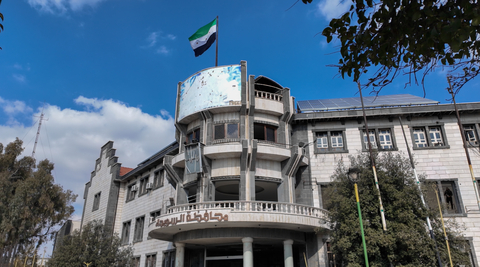
Salam Kabboul, Sweida – January 2025.