She saw them die.
The walls of her home collapsed in fire and dust, swallowing her family in an instant. She didn’t have time to check if they were breathing or if any of them had made it.
She just ran.
Her little brother in her arms, his body suddenly stiff and silent, ran through the dark streets, following the frantic movements of her surviving neighbors. Some women were screaming, and others were praying out loud. No one knew where they were going.
No one looked back.
By dawn, they found themselves in a public school, miles away from home. She didn’t know how they got there, or who had guided them through the night. Strangers handed her a mattress, a blanket, and a box of supplies. That night, she believed in hell. A hell that doesn’t even let you bury your loved ones.
When I visited the shelter, I met her. A teenager with hollow eyes but a quiet smile.
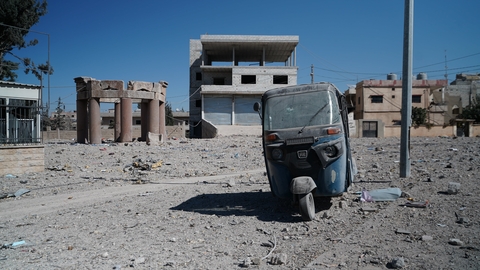
“My brother hasn’t spoken since the bombing,” she told me. “And my leg… it hurts, but I didn’t say anything. Talking about it feels like a luxury.”
She had been limping for days, her pain buried under the weight of survival. She hadn’t let go of her little brother’s hand since the night they fled.
I got him a painting kit. Something to pull him out of silence. I got her some painkillers.
She smiled and simply asked:
The pain I feel inside… do you have pills for that?
She looked at me, unblinking.
I have no family. No home to go back to. A child on my hands. Death… sometimes it feels like a bliss.
War does not just destroy homes. It uproots people, fractures families, and plants fear where certainty used to be. And for this girl, a child herself, forced into motherhood overnight, the real war was not just survival. It was the unbearable question of why she had survived at all.
Her story is one among thousands. And yet, it is hers alone.
Lebanese-Israeli War 2024.
War is often told through headlines, casualty counts, and sweeping narratives of national loss. Within these generalized accounts, the individual, and especially the woman, usually folds into a collective experience that overlooks her personal suffering, resilience, and survival. This project seeks to break that silence by documenting the voices of displaced women, whose lives were irrevocably changed by war but whose stories rarely find space in public memory.
Through a series of deeply personal testimonies gathered from women in shelters and displacement homes in Lebanon’s underprivileged urban peripheries, particularly in regions like the Bekaa and Baalback, we aim to highlight the layered and often invisible impact of conflict on women. These areas receive minimal attention from the government, and many are underdeveloped, with weak infrastructure making it more difficult to live a dignified life.
The testimonies collected in this project are not just about displacement; they are about motherhood under fire, generational trauma, loss without closure, and strength in the face of abandonment. They reflect how women carry war in their bodies, silences, and quiet acts of endurance. By centering their voices, we challenge the dominant, family-centered narratives of war and bring forward a gendered lens that reveals the intimate and often overlooked dimensions of conflict.
This project is both an act of documentation and of recognition. It insists that women’s experiences during war are not secondary; instead, they are central. Their voices deserve to be heard not as background noise to the chaos, but as the heartbeat of survival itself.